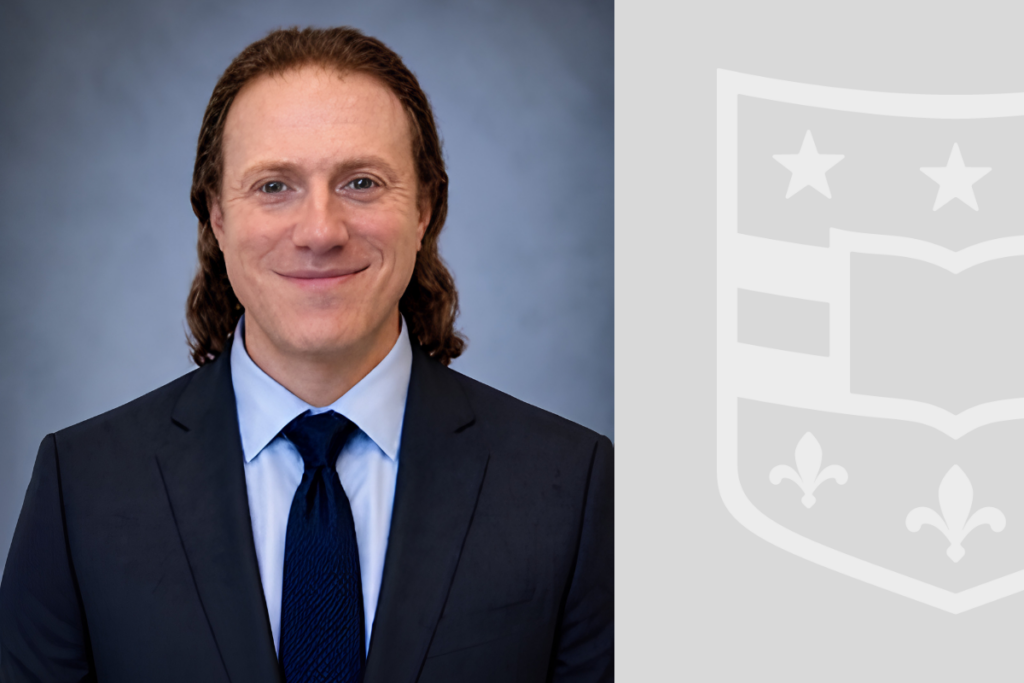
It is my distinct pleasure to announce that Robert E. Schwartz, MD, PhD, will be the new Chief of the Division of Gastroenterology in the Department of Medicine at Washington University School of Medicine (WashU Medicine), effective October 6, 2026.
Dr. Schwartz is currently Professor of Medicine, Physiology, Biophysics, and Systems Biology at Weill Cornell Medicine in New York City, and Professor of Biomedical Engineering at Cornell University (by courtesy) in Ithaca, NY. He also serves as an Associate Attending Physician at New York-Presbyterian Hospital.
Dr. Schwartz is an outstanding gastroenterologist, hepatologist, and an internationally recognized physician-scientist in stem cell biology and infectious disease modeling.
Dr. Schwartz completed his undergraduate training at The Cooper Union for the Advancement of Science and Art in New York, where he earned a Bachelor of Engineering. He received his MD and PhD in Biomedical Engineering in the Medical Scientist Training Program at the University of Minnesota. Dr. Schwartz returns to familiar ground at WashU Medicine, having completed his medicine internship and residency here at Barnes-Jewish Hospital / WashU, where he received the Gregory J. Gurtner Internal Medicine Residency Research Award. He went on to complete his fellowship training in Gastroenterology and Hepatology at Brigham and Women’s Hospital and Harvard Medical School in Boston, followed by a postdoctoral research fellowship at the Massachusetts Institute of Technology.
Dr. Schwartz began his academic faculty career in Internal Medicine at Harvard Medical School. In 2014, he was recruited to Weill Cornell Medicine as a physician scientist in the GI division, expanding his research in hepatology and infectious disease, while maintaining a robust clinical practice as an attending physician doing inpatient GI consults, hepatology clinic and endoscopy.
As an exceptional physician-scientist, Dr. Schwartz has made seminal contributions to the fields of hepatic stem cell differentiation, viral hepatitis, and tissue engineering. He was among the first to successfully differentiate pluripotent stem cells into functional hepatocyte-like cells to model complex liver physiology. His lab has uniquely leveraged these bioengineered platforms to study challenging host-pathogen interactions for hepatotropic infections including Hepatitis B, C, and D. During the COVID-19 pandemic, Dr. Schwartz co-led major collaborative, multi-institutional efforts utilizing human pluripotent stem cell-derived organoid platforms to map SARS-CoV-2 cellular tropism and identify crucial antiviral inhibitors for drug repurposing trials. His extensive research enterprise is supported by multiple grants from the NIDDK, NIAID, Department of Defense, NASA, and various private foundations, including the Gastro-Intestinal Research Foundation. He holds several patents for clinical technologies such as CRISPR-Cas systems targeting HBV and viral diseases and has published extensively in premier scientific journals, including Nature, Cell, Cell Stem Cell, Science Translational Medicine, PNAS, Gastroenterology, and Hepatology.
Dr. Schwartz is deeply committed to institutional leadership, GI research, clinical programs, medical education, and professional service. Beyond serving on the editorial board of the Journal of Hepatology and previously for Hepatology, he serves on the external advisory boards of multiple major digestive disease research centers across the United States. He is also highly active in national societies, holding multiple leadership roles within the American Association for the Study of Liver Diseases (AASLD) and the American Gastroenterological Association (AGA) on research policy committees and research awards panels.